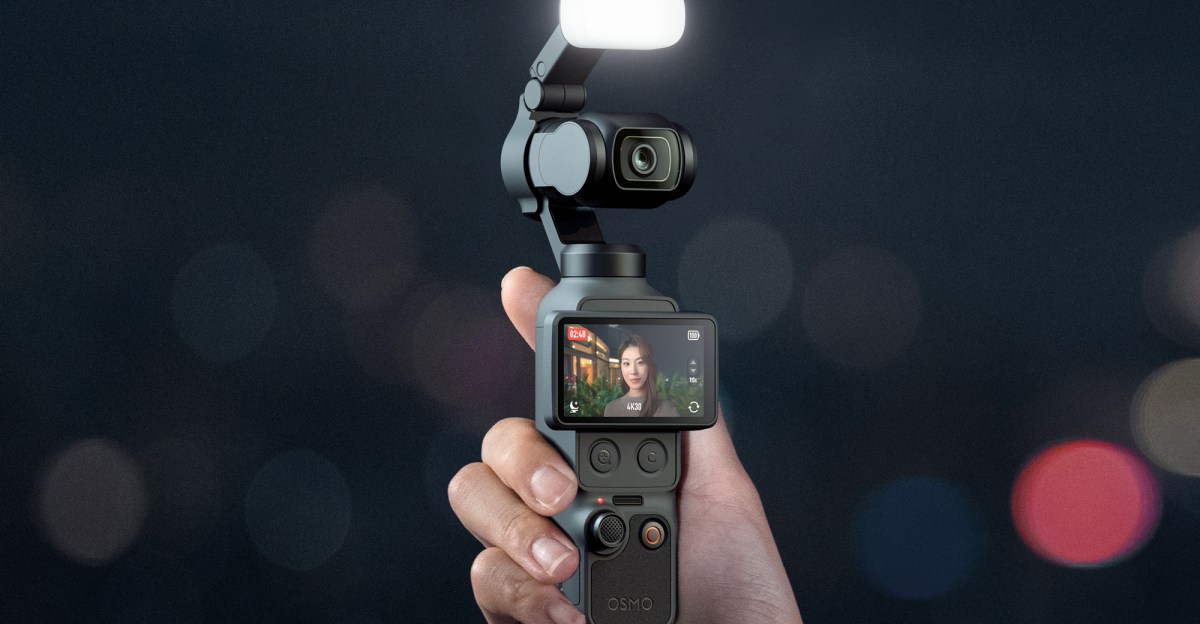
DJI has quietly pushed its Pocket line forward without blowing up the formula: the new Osmo Pocket 4 keeps the tiny, gimbal‑stabilized body creators love, but upgrades the imaging, controls and workflow in ways that matter to vloggers and run‑and‑gun shooters.
What’s different this time
At the heart of the Pocket 4 is an updated 1‑inch sensor and a sharper set of tools. DJI is promising 14 stops of dynamic range and a true 10‑bit D‑Log profile, meaning more latitude for color grading and cleaner highlights and shadows than before. Slow‑motion got the headline upgrade: 4K at 240 fps (4Kp240), so you can squeeze dramatic motion into short clips without dropping to 1080p. For stills, there’s an unexpected leap — a SuperPhoto mode that can produce up to 37‑megapixel images, a big jump from the Pocket 3’s ~9.4MP single‑shot cap.
You’ll also find creative nudges baked in: six new on‑camera “Film Tones” for instant looks, a deeper ISO range (up to 12,800), and expanded shutter controls down to 1/4s for exaggerated light trails.
Controls and accessories that feel earned
This isn’t just spec polishing. DJI added a 5D joystick that’s more responsive, two physical buttons under the screen (one dedicated to zoom), and a customizable button that can be single‑, double‑ or triple‑clicked for different shortcuts. The gimbal arm now has magnetic contacts for modular accessories — starting with a tiny magnetic fill light that clips on and draws power from the camera.
Audio has improved, too. The Pocket 4 can record spatial audio with its three onboard mics, and there are practical features like vocal boost and audio zoom (the latter remains a patchy but occasionally handy trick). For creators who care about sound, DJI’s wireless Mic 3 pairs natively and the Creator Combo bundles a transmitter — and the Pocket 4 can export a multi‑channel file combining internal and external mic tracks for easier editing.
Workflow upgrades: storage, battery and screen
A welcome addition is 107GB of onboard storage, enough for many hours of footage before you need a card. USB 3.1 and Wi‑Fi 6 support speed transfers up, and the OLED screen is brighter (1,000 nits) for outdoor framing. Battery capacity grows to 1,545mAh — DJI quotes long runtimes (up to four hours in ideal 1080p conditions) and much faster charging if you use a 65W PD brick.
These changes make the Pocket 4 a more practical tool for creators who edit on the go: fast offloads and the option to keep some footage on the device mean you can skip an extra SD shuffle and move faster on a laptop or lightweight machine like the MacBook Neo if you’re cutting on the road MacBook Neo.
What it shoots and how it behaves
- 4K video, with 10‑bit D‑Log and up to 240 fps for slow motion
- 37MP SuperPhoto stills (1:1), typical photo resolution similar to 4K otherwise
- 2x "lossless" zoom in 4K (4x in 1080p) and ActiveTrack 7.0 that works with zoom
- New film tones, improved low‑light performance and wider ISO range
In practice, reviewers found the camera’s low‑light handling noticeably better than the Pocket 3, with cleaner shadow detail and more natural skin tones. The lossless zoom is handy for framing without stepping back, though optical zoom still isn’t on the table.
Pricing, bundles and the awkward availability note
DJI is offering three combos in Europe and other markets: an Essential Combo around £429/€479, a Standard that tacks on straps and a clamp for slightly more, and a Creator Combo (roughly £549/€619) that includes the magnetic fill light, a mini tripod and a wireless mic transmitter.
One important wrinkle: DJI told press the Osmo Pocket 4 will not be available in the US at launch because the company’s authorization application is still pending. It’s shipping in China immediately and heading to global markets soon, but U.S. buyers should expect a delay.
Who should upgrade — and who should stick with a phone?
If you already own a Pocket 3 and you regularly need slow motion, better low‑light results, or the convenience of internal storage, the Pocket 4 is a tidy, sensible upgrade. If you’re shopping for your first compact vlogging camera, the Pocket 4 remains compelling because it delivers gimbal stability, a real 1‑inch sensor and pro color tools in a pocketable package.
That said, many creators still find competent results from flagship phones; modern handsets shoot great video and are easier to carry. If you’re weighing a dedicated camera against a smartphone you might consider current phone alternatives and deals — phones like Samsung’s S26 series remain strong contenders for simple vlogging setups where to score a Galaxy S26.
DJI hasn’t reinvented the tiny gimbal camera, but it has tightened the experience: smarter controls, meaningful image improvements and a few modular ideas that could expand the platform. For anyone who films regularly and wants a single, pocketable device that behaves like a proper camera, the Osmo Pocket 4 makes a persuasive case — provided you don’t live in the U.S., at least for now.