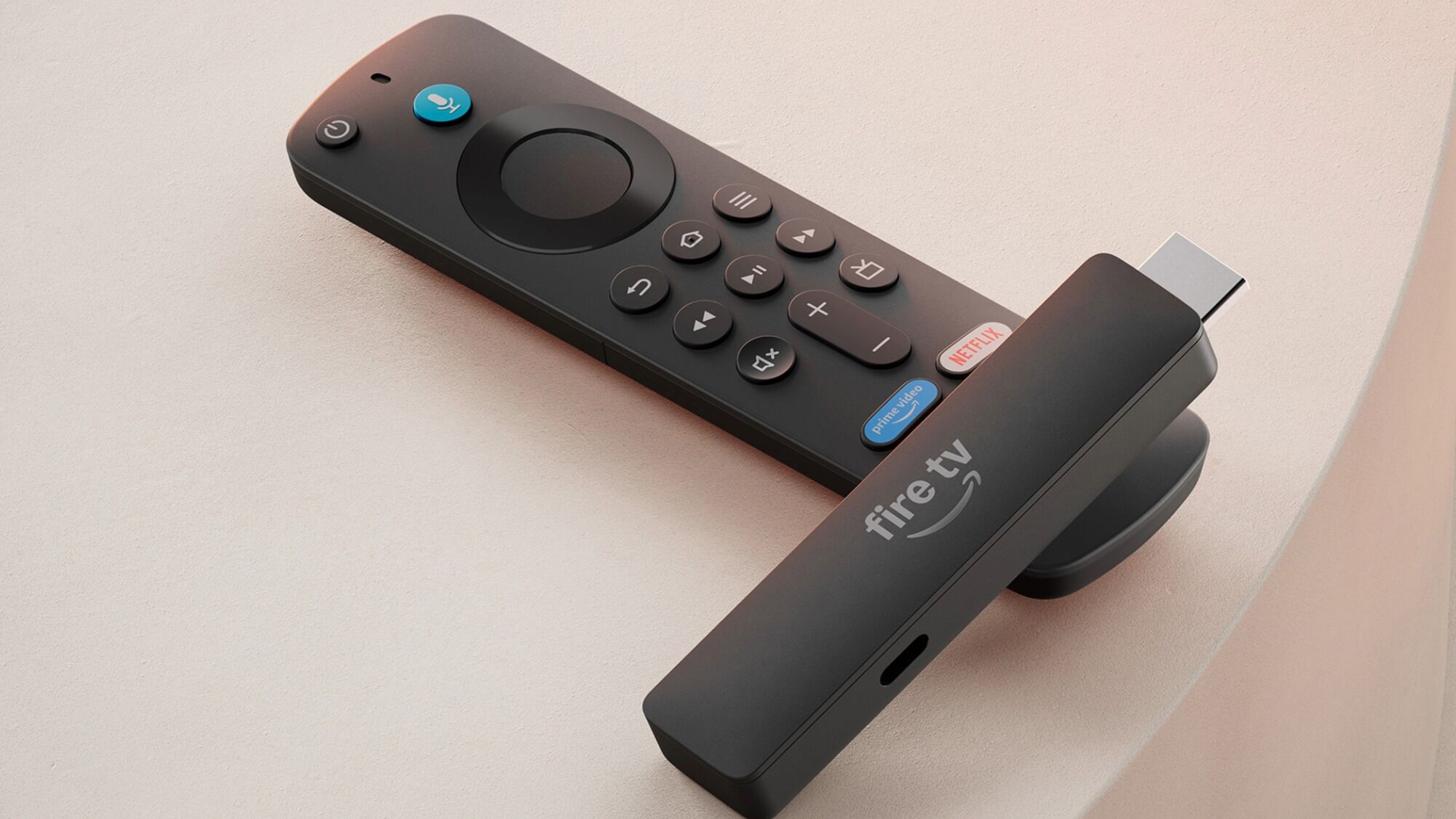
A travel-friendly streaming stick that’s 30% narrower than before, packs Wi‑Fi 6 and a speed bump — and quietly carries a limitation some users care about: it may not let you install apps from outside the Amazon Appstore.
Amazon’s freshly announced Fire TV Stick HD is being sold as the company’s slimmest, most portable streaming puck yet. Priced at $34.99 in the U.S. and up for preorder, it promises faster app launches, Bluetooth 5.3, and a redesigned Fire TV experience with Alexa+ built in for the U.S., UK and Canada. It also draws power differently: the stick can run directly from a TV’s USB port (with a cable included), which makes it easier to hide behind a set when you travel.
But beneath that minimalist shell sits a bigger change: the new stick runs Vega OS, Amazon’s Linux‑based operating system, rather than the Android‑forked Fire OS many Fire TVs have used.
A warning that showed up for some shoppers
On certain Amazon product pages, shoppers are seeing an alert that reads: “For enhanced security, this device prevents sideloading or installing apps from unknown sources. Only apps from the Amazon Appstore are available for download.” The message first surfaced in screenshots shared by Cord Cutters News and was picked up by several outlets. Oddly, not every visitor sees it — which suggests Amazon may be rolling the notice out in waves or running an A/B test.
Sideloading has always occupied a gray area on Fire TV devices: not officially encouraged, but commonly done by power users to install third‑party streaming apps or developer builds. If Vega‑powered sticks truly prevent sideloading, that would lock users to apps Amazon approves and distributes through its Appstore.
Why would Amazon do that? The company’s public rationale, where it exists, leans on security and a tighter, more controlled platform experience. From a business perspective, it’s a way to shepherd users toward verified apps — and toward services that play nicely with DRM and Alexa features — but it also narrows what advanced users can tinker with.
Vega: Amazon’s move away from Android‑forked Fire OS
Vega isn’t brand new — Amazon has been building it for a while and has already used it in some Echo Show smart displays and in the Fire TV Stick 4K Select introduced late last year. Amazon describes Vega as a compact, efficient, Linux‑based OS that scales from tiny sticks to devices that do on‑device AI. The company has told developers it plans to support both Vega and Fire OS across different products, but industry reporting and Amazon’s own device roadmap suggest Vega will be the foundation for future Fire TV hardware.
That shift matters because Vega’s architecture gives Amazon a fresh slate for performance and security choices — including tighter app installation controls.
Specs, features and availability
Highlights of the Fire TV Stick HD include:
- Roughly 30% narrower than the outgoing HD stick
- Faster overall responsiveness — Amazon says about 30% faster on average than the previous HD model
- Wi‑Fi 6 and Bluetooth 5.3 support
- Direct Power via TV USB (cable included) or optional USB‑C/wall adapter
- Alexa+ built in for the U.S., UK and Canada, to offer conversational content discovery
- Accessibility improvements such as a forthcoming Adaptive Display setting
Amazon says the Fire TV Stick HD will ship to customers in more than a dozen countries starting April 29, with preorder available now.
Support promises — and an exception
In tandem with the launch, Amazon also extended software compatibility and security support for a wide swath of Fire TV sticks and cubes through December 31, 2030. The exception is the original Fire TV Stick 4K, which gets support through the end of 2029.
Extending long‑term support will comfort many owners — especially as Amazon moves platform architectures — but it also raises a question: how will older Fire OS devices interact with Vega devices on the same home network and account?
What this means for users and developers
For most mainstream buyers — people who stream from Netflix, Prime Video, Disney+, and other big names — the change is unlikely to be painful. Major streaming apps will continue to be available through Amazon’s Appstore on Vega devices, and built‑in features like Alexa+ aim to make content discovery easier.
For enthusiasts who sideload apps such as custom IPTV clients, Kodi, or experimental builds, the new limits (if enforced) are meaningful. They’ll either need to hang on to older Fire hardware that still allows sideloading, find alternate devices that run Android TV/Google TV, or accept only Appstore offerings. Amazon’s earlier shift to cut legacy Kindle services shows the company isn’t averse to drawing clear lines around which older devices keep which features — a move that affected Kindle owners recently in a different product line. For more on Amazon's decisions around legacy device support, see the explainer on how Amazon will cut Kindle Store access for older Kindles here.
Developers eyeing Vega will want to follow Amazon’s platform guidance closely. Vega is Linux‑based, and the company has framed it as scalable and efficient — a direction that echoes broader industry moves to rethink where and how operating systems run on consumer devices. The change also ties into larger conversations about Linux’s role in device platforms, and how new OS designs balance openness with control; for a wider view on Linux’s evolving role, see this related piece on Linux and AI in the kernel here.
A small device with big implications
The new Fire TV Stick HD is an easy sell on size, price and portability: tiny, inexpensive, and built to travel. But the little hardware tweak that restricts sideloading — at least on some units and in some storefront listings — signals a broader shift. Amazon isn’t just iterating on specs; it’s tightening the rails on how software gets onto its TV platform.
That will please customers who want fewer headaches and a more curated experience; it will frustrate anyone who values the flexibility to install whatever they like. Either way, this launch is a reminder that small gadgets can have outsized effects on who controls what we run on our screens.