Imagine asking Siri a question and choosing which AI “brain” answers — ChatGPT, Claude or Google’s Gemini. That’s the direction Apple appears to be heading.
Apple is preparing two new, much more visible apps for its ecosystem: an Apple Business app tied to the company’s revamped Apple Business platform, and a dedicated Siri app that brings chatbot-style conversations to iPhone, iPad and Mac. The Business platform officially launches April 14 and consolidates Apple Business Essentials, Business Manager and Business Connect into a single service; the Apple Business app will require iOS 26, iPadOS 26 and macOS 26.
Siri as an app — and a switchboard for multiple AI models
The Siri app — reported to arrive as part of iOS 27, iPadOS 27 and macOS 27 later this year — is more than a facelift. Sources say it will let users interact with Siri by voice or text, access past conversations and, crucially, pick which third-party assistant to use through an “Extensions”-style system. Practically speaking, you would download the chatbot app you want (OpenAI’s ChatGPT, Anthropic’s Claude, Google’s Gemini, etc.), then select that model in Settings → Apple Intelligence and Siri. The assistant would then route relevant queries to your chosen provider.
That marks a reversal from Apple’s earlier, tighter arrangements. Since 2024 Apple has leaned on outside models to give Siri smarter conversational answers; now it looks ready to open that gateway wider. Reports also indicate Google’s Gemini will still perform certain on-device tasks even if a user opts for a different external model — Apple isn’t handing total control over to competitors.
Opening Siri to multiple providers serves several purposes. It buys Apple time while it continues to develop its own underlying models, offers users more choice, and creates new subscription and App Store revenue opportunities as third-party AI services push paid tiers through the store.
What this means for users and developers
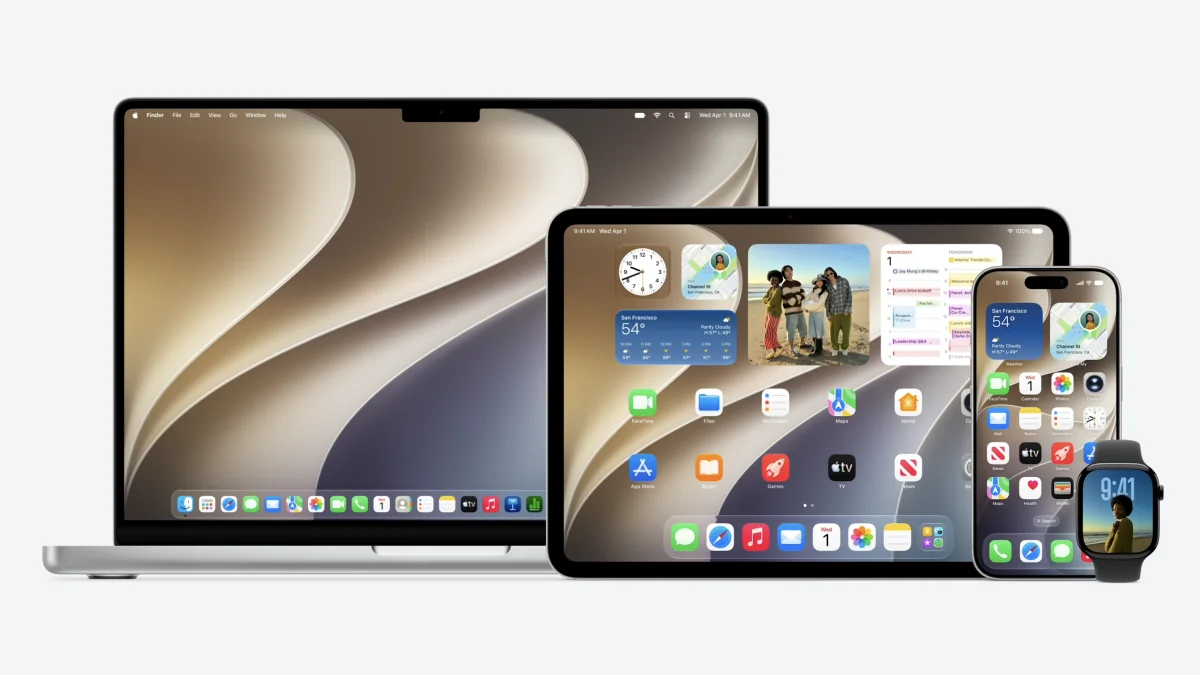
Expect cross-platform availability: the new Siri experience will be available on iPhone, iPad and Mac. It will support both voice and typed conversations and let you revisit previous chats — a convenience that makes the assistant feel more like a messaging app than a clipped voice utility.
Developers of AI services will get a direct integration path into the Apple ecosystem, but they’ll also face App Store rules and fees when selling subscriptions. For users, that could mean more flexible, possibly better answers — but also more decisions about privacy, data routing and subscription costs.
Apple has already begun plumbing the software layers for this shift. Recent iOS updates added features that prepare the platform for richer AI interactions — for example, iOS 26.4 included CarPlay enhancements and groundwork for voice-based chatbot apps on vehicles, showing how Apple is gradually rolling AI into different touchpoints across its products. For details on those recent changes, see our coverage of iOS 26.4’s tweaks and feature set iOS 26.4 softens Liquid Glass, adds emoji and music tweaks — macOS gets battery smarts and a practical roundup of what arrived in the update iOS 26.4 lands: security fixes, AI playlists, new emoji — and a reason to update now.
The bigger picture: supply chain moves and strategic trade-offs
These software shifts come alongside hardware and supply-chain adjustments. Apple is expanding its U.S. manufacturing footprint — adding suppliers such as Bosch, TDK, Cirrus Logic and Qnity Electronics — a move that diversifies production and tightens control over components as the company stitches hardware more tightly to AI-enabled features.
There are trade-offs. Letting third-party AIs power parts of Siri reduces the pressure to ship a flawless, in-house large language model immediately, but it also introduces complexity: competing commercial interests, mixed-quality answers, and potential privacy trade-offs depending on how requests are routed and logged. Apple’s partial reliance on Google and other partners for certain tasks suggests the company wants the benefits of outside expertise while holding onto some system-level control.
Expect Apple to frame these changes around user choice and convenience. But for privacy-minded users, the fine print — which assistant handles what, and where data is stored or processed — will matter. Apple’s settings and the dialogs it exposes when you pick a model will be a key part of how calmly or contentiously this change lands.
If Apple follows the timeline suggested by reports, the Business app will arrive with the new Apple Business platform this spring, while the Siri app and its multi-model plumbing will be unveiled formally at WWDC and land with iOS 27 later in the year. The result could be a very different Siri: less of a single voice and more of a hub that lets you pick the voice you want.
Tags: Apple, Siri, iOS, AI, Apple Business