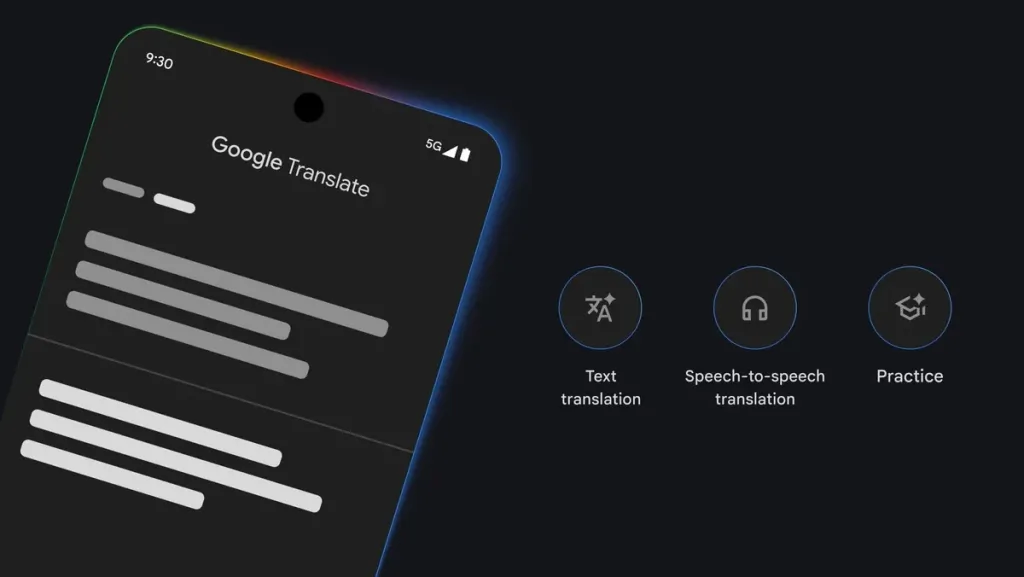
Google is rolling out a practical bit of AI that feels more like a travel hack than a lab demo: Live Translate for headphones — the real‑time, Gemini‑powered translation experience that turns any pair of earbuds into a one‑way translator — is no longer limited to a handful of Android users.
What changed
Starting this week the Live Translate headphone feature is available on iOS as well as Android, and it’s expanding beyond the U.S., India and Mexico into a wider group of countries, including Germany, France, Spain, Italy, the U.K., Japan, Thailand, Bangladesh and Nigeria. The feature supports more than 70 languages and works with any connected headphones, not just a particular brand.
To try it, open the Google Translate app, tap the Live Translate option and connect your headphones. You can choose Listening or Conversation modes and let Google’s models render spoken words into your language in near real time.
Why it matters
Two things make this more than a novelty. First, the system aims to preserve each speaker’s tone, emphasis and cadence — not just an accurate literal translation — which helps you tell who said what and follow conversational flow. Second, because it runs through the Translate app and works with any earbuds, it sidesteps the ecosystem lock‑in other solutions sometimes impose: you don’t need a specific pair of wireless earbuds to get instant, headphone‑delivered translation.
That contrasts with some rival features that tie live translation to a particular device and headset combination, a limitation Google’s move deliberately undercuts.
Gemini inside: smarter, more natural output
Under the hood, Google is using its Gemini family of models to improve contextual understanding. For text translation, Gemini is handling idioms, slang and nuanced phrases so translations read more naturally instead of coming back as flat literal renderings. Google says Gemini translate is rolling out for English and nearly 20 other languages on the web and in the Translate app.
For the headphone experience, Gemini helps maintain prosody — the rhythm and stress of speech — so the translations feel less robotic and easier to follow during back‑and‑forth talk.
Real-world uses — and limits
Google highlights obvious travel scenarios: following announcements at a train station, asking for directions, or keeping up with relatives at a multilingual dinner table. Early users and reviewers note it can be a game‑changer for casual face‑to‑face interactions where pausing to type or read subtitles would be clumsy.
A few practical notes: rollout timing still appears staggered — not everyone will see the option immediately after updating the app — and the experience is effectively one‑way when using headphones (you hear translations), so it’s best for listening and understanding rather than replacing a fluid bilingual exchange.
Where this sits in the wider landscape
Google’s move is part of a larger push to fold Gemini into consumer products — the company is also expanding its Search Live conversational search features globally — and to make AI translation less of a novelty and more of a daily utility.
Apple has its own live translation capabilities, but some of those tools have tighter device requirements. For readers wondering about iPhone compatibility and related software features, Apple’s recent iOS updates are worth checking; they show how quickly on‑device and cloud features are evolving across platforms. See more about the latest iOS changes in coverage of iOS 26.4 softens Liquid Glass, adds emoji and music tweaks and the broader iOS 26.4 release notes and improvements.
Quick how‑to
- Install or update Google Translate on your phone
- Pair any headphones/earbuds via Bluetooth
- Open Translate, tap Live Translate, select Listening or Conversation
The translations stream into your ears; if you want to hear who’s speaking, the preserved cadence and emphasis are meant to make that easier.
This expansion doesn’t rewrite language education or instantly solve every cross‑lingual nuance, but it lowers a practical barrier: you no longer need a specific headset to get near‑instant translations in dozens of languages. For travelers and families juggling multiple tongues, that’s a small convenience with outsized value.