Ask yourself this: what if your earbuds could see? That’s the idea Apple appears to be polishing — quietly, inside labs where prototypes are already being worn.
Mark Gurman’s reporting and follow-ups from several outlets suggest Apple’s next big AirPods leap has entered the design validation testing (DVT) stage. In plain terms: prototypes are close to a final shape and engineers inside Apple are actively using them. The next checkpoint is production validation testing (PVT), the step just before early mass production.
What these AirPods would actually do
Don’t imagine tiny cameras for Instagram or vlogging. Apple’s rumored sensors are meant to be Siri’s eyes — low‑resolution visual feeds (possibly infrared) that inform on-the-fly questions. Think: you point your head at the fridge and ask what to cook with what’s inside, or you walk down a street and Siri cues a landmark for the next turn. Reports say there will be a camera in both the right and left earbuds and a small LED that lights up when visual data is being sent to the cloud.
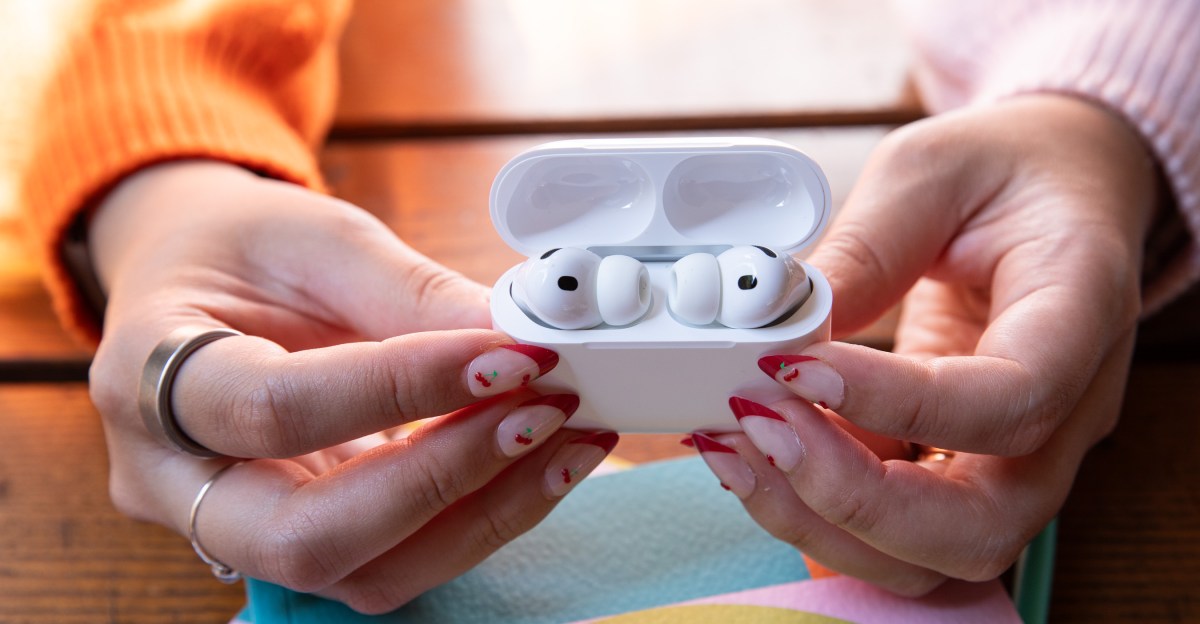
Design-wise, the earbuds are said to resemble the AirPods Pro 3 but with longer stems to house camera hardware. Apple has considered positioning them above the Pro line — some sources call them “AirPods Ultra” — which would put them at a premium price point compared with the current $249 AirPods Pro 3.
Timing, context and the AI puzzle
Apple apparently planned a launch as early as the first half of 2026 but pushed that back because its next‑generation Siri has been delayed. The company’s broader AI timeline is in flux; Siri upgrades and platform changes tied to iOS releases are still being worked through, and Apple’s device plans are clearly interdependent. For background on Apple’s Siri roadmap and OS timing, see coverage of the iOS betas and Siri’s absence in recent previews here.
This earbuds effort doesn’t exist in isolation. Apple is broadening its hardware play into AI — from rumoured no‑display glasses to a pendant — as part of a much larger strategy that intersects design, privacy and ecosystem control. For a longer look at how AI is reshaping Apple’s product thinking, this recent piece places the move into a bigger historical arc here.
Why people will be excited — and uneasy
There are obvious conveniences: hands‑free visual queries, contextual reminders triggered by objects, and navigation that can reference visible landmarks rather than just map geometry. For someone who treats Siri like a second pair of hands, an earbud that can parse the scene could be genuinely useful.
Then there’s privacy. Even if the cameras deliver only low‑resolution imagery and include an LED indicator, a networked device that continuously samples your surroundings raises familiar surveillance questions. Will the visual data be processed locally or funneled to Apple’s cloud? Can it be turned off easily? And who else, if anyone, could access the feed? Those are the conversations regulators and privacy‑minded users will press Apple on.
Where this puts Apple in the arms race
Adding vision to earbuds nudges Apple into direct comparison with Meta’s smart glasses, and with general trends toward sensor‑rich wearable AI. Unlike some rivals, Apple’s strength is its tight hardware‑software integration and its ability to push a single AI experience across phones, wearables and services. That control is also the reason its moves attract scrutiny: the more eyes in the ecosystem, the heavier the responsibility.
Reports indicate Apple is working on secure components for mass production, which suggests the company expects strong demand and is trying to iron out manufacturing and security at scale before a big launch.
Apple’s camera‑equipped AirPods remain a rumor until the company announces them, but the signals are clear: prototypes in active use, a near‑final design, both‑ear cameras, visual cues for Siri rather than high‑res photo capture, and a likely premium positioning. Whether consumers embrace the idea will depend as much on the software — how Siri handles and protects that visual data — as on the hardware itself.