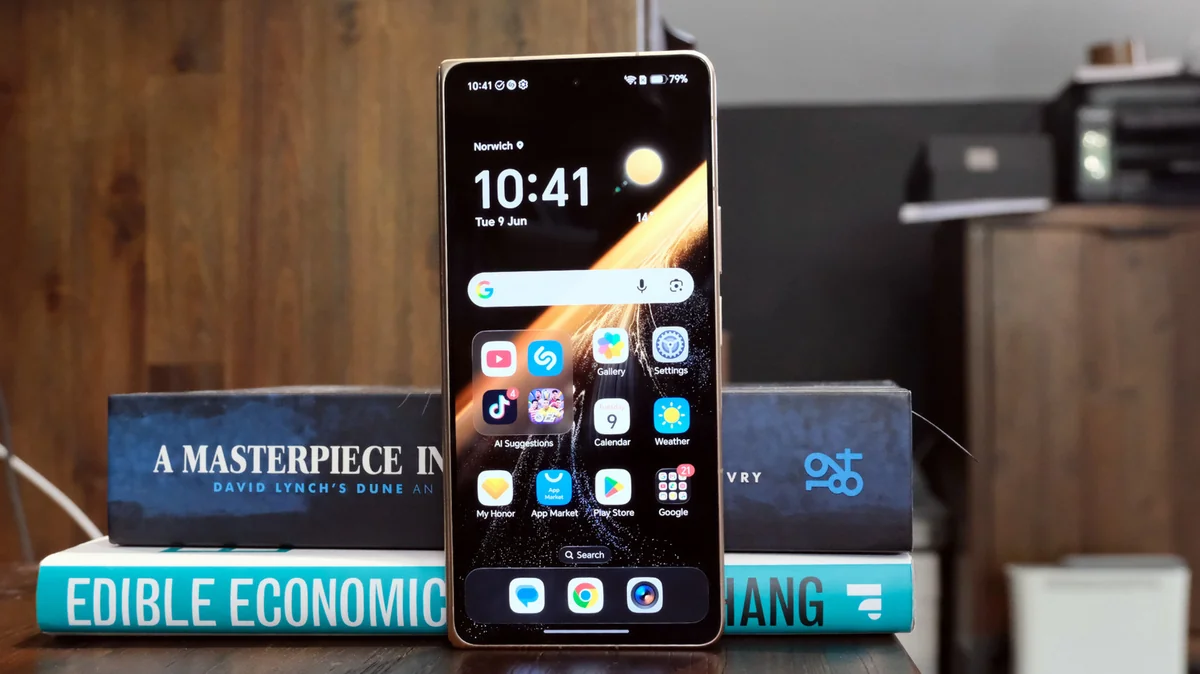
Ask someone to imagine the perfect foldable and you’ll probably hear two competing demands: make it thin, and make it durable. Honor has tried to chase both with the Magic V6, a phone that simultaneously feels like a mechanical triumph and a work in progress.
What Honor got undeniably right
Open the Magic V6 and you’re greeted by a 7.95‑inch AMOLED that feels composure‑first: a subtle crease, a tall-but-useful canvas for split‑screen apps, and enough pixel density to make documents and video look crisp. Honor shaved millimeters over last year’s V5 not by sorcery but by redesigning almost every internal component — antenna, hinge, speaker chamber, SIM housing — and somehow shoehorning in a huge 6,660 mAh silicon‑carbon battery for the global model (some China SKUs go even higher).
Under the hood sits Qualcomm’s Snapdragon 8 Elite Gen 5 paired with up to 15 GB of RAM and roomy storage. In daily use the V6 feels fast: heavy gaming, multi‑window workflows and prolonged streaming are handled without flinching. Honor’s engineering shows up in the chassis too: IP68 and IP69 ratings, a Super Steel hinge rated for hundreds of thousands of folds, and tougher cover glass make this one of the hardiest book‑style foldables you can buy today.
Pocket‑lint and others noticed the same resilience: Honor layered in Super Armored inner screen tech, a 2,800MPa steel hinge and eye‑care display features like high‑frequency PWM dimming and TÜV certifications — a thoughtful touch for people who stare at screens all day.
The battery that changes the day
A 6,660 mAh silicon‑carbon cell isn’t marketing fluff. In mixed real‑world use the Magic V6 often stretches into a second day, and lab-style rundown tests show marathon runtimes. Fast charging is generous too: up to 80 W wired and 66 W wireless support means quick top‑ups. For many, that battery alone will be a decisive reason to consider the V6 over slimmer but thirstier rivals.
Software: where the shine dulls
This is where the review consensus gets thorny. MagicOS 10 on Android 16 brings useful ecosystem work — impressive cross‑platform tricks that let the phone pair with AirPods as if they were Apple hardware, hand notifications between iPhone and iPad, and even act as a secondary display or file manager for macOS with Honor’s Workstation app. Those features make the V6 feel like a real productivity tool rather than a curiosity, especially for people juggling Apple and Android kit.
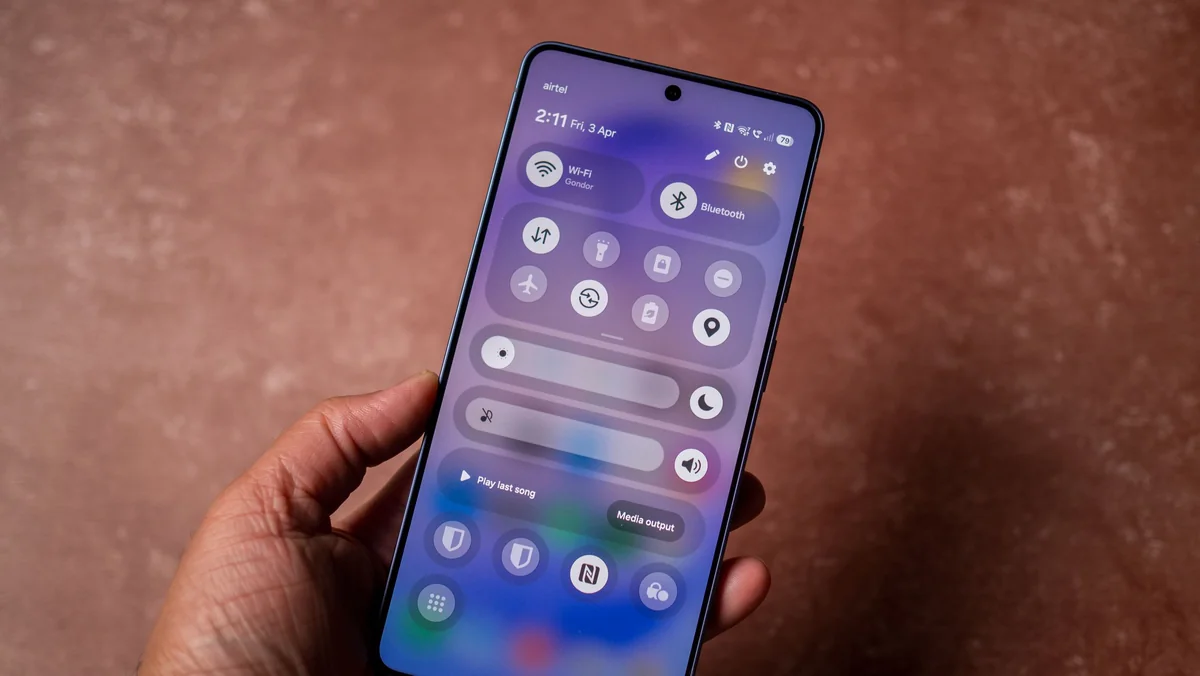
But the UI itself still shows rough edges. Reviewers repeatedly call out inconsistent fonts, awkward layouts and multitasking quirks: some apps simply refuse to behave in split‑screen, and a few UI bits look like they escaped a QA pass. Camera software leans hard into AI tricks that sometimes produce artifice rather than better photos — harsh subject cutouts in portrait mode and aggressive digital zoom fill‑ins were singled out as examples.
Honor has been promising longer support for the Magic line — a welcome reassurance in a segment where buyers expect longevity — and in the EU the company is committed to seven years of OS and security updates, which shifts the conversation about long‑term ownership for foldable buyers (Magic series updates).
Cameras and daily use
Squeezing triple lenses into a thin folding body remains a technical compromise. The V6’s setup — 50 MP main, 50 MP ultra‑wide and a 64 MP periscope offering 3x optical zoom — is competent and often pleasing for daylight shots. It won’t dethrone the best camera phones, but it’s a sensible middle ground for a device that has to balance thickness, hinge mechanics and thermals. AI zoom and computational tricks can be fun, but sometimes they overshoot — producing images that look processed rather than natural.
Who should consider the Magic V6
If you want a foldable that feels engineered rather than experimental — a thin, rugged, long‑lasting device that doubles as a workable mini‑tablet — the V6 ranks near the top of the list. Professionals who value battery life, people who squeeze spreadsheets and documents into phone time, and anyone who wants real Mac/phone interoperability will appreciate it. Honor also leans into productivity features like Fast Flex which automatically stacks split‑screen workspaces on unfold.
If you are a stickler for polish and a buttery‑smooth ecosystem experience out of the box, be warned: some software roughness might grate at this price point.
A wider context
Book‑style foldables remain in transition as manufacturers chase slimmer profiles, wider inner displays and better crease mitigation — research and materials advances are already reshaping that path forward, and competitors (including Apple’s rumored approaches) change the stakes for what a foldable should be when crease‑hiding tech matters.
Honor’s Magic V6 is ambitious in the places that count — hardware engineering, battery chemistry and practical cross‑platform features — but it’s also a reminder that hardware can outpace software. The result is a machine you want to pick up and use, even when some parts of the experience still feel like they need more time in the oven.