Apple quietly remixed its 27-inch monitor lineup this spring — the familiar Studio Display got a modest internal refresh, while the new, higher-end Studio Display XDR has already seen an unusual price tweak. If you’ve been watching Apple’s monitor politics from the sidelines, the scene now looks less like a revolution and more like careful product pruning: same screen, smarter internals, and a little nudge on price where it mattered.
What changed under the hood
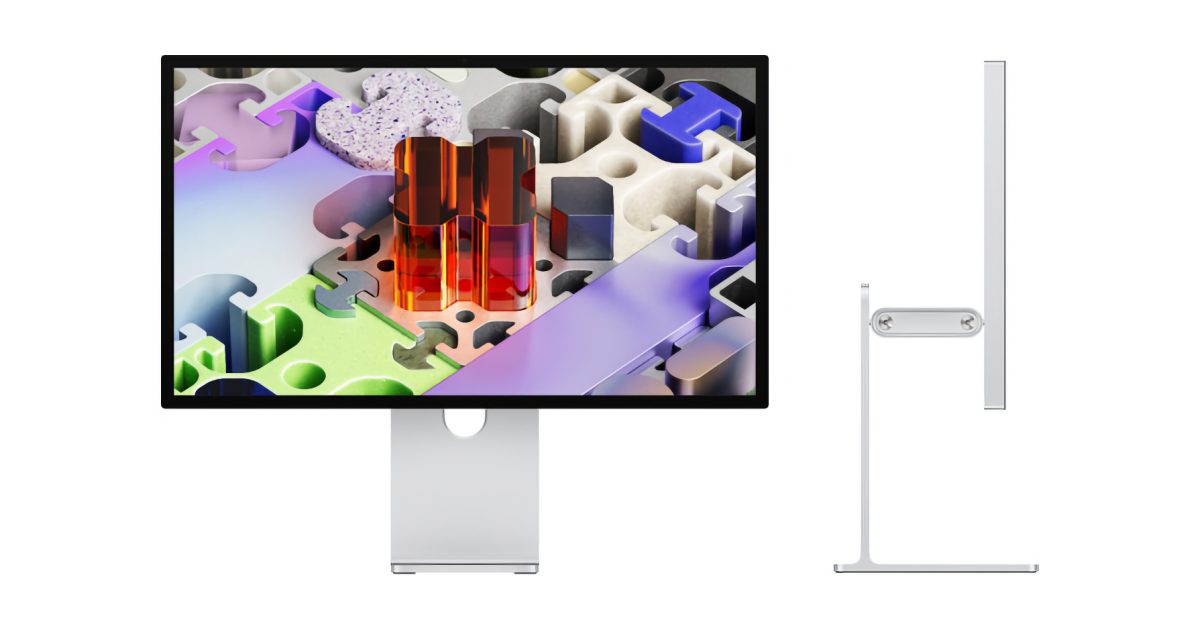
The 2026 Studio Display keeps the same 27-inch 5K LCD panel (60 Hz, about 600 nits), the same clean aluminum shell, and the same $1,599 starting price as the 2022 model. The differences are mostly internal and functional. Apple swapped the old A13 for an A19 chip, doubled the RAM to 8GB, and doubled storage to 128GB. More practical for desk setups: Thunderbolt 5 replaces the single Thunderbolt 3 port, and there are now two TB5 ports — one upstream with 96W charging and one downstream for accessories or daisy-chaining. The camera still uses 12MP Center Stage, but gains Desk View processing, and Apple says the six-speaker system now delivers about 30% deeper bass. Apple even ships a Thunderbolt 5 Pro cable (1 m) in the box.
Those are tidy, useful updates — but they don’t change the actual picture. If you owned a 2022 Studio Display primarily for its screen, this isn’t the upgrade that will transform your day-to-day visuals.
The XDR shake-up: a rare Apple price cut
Less than a month after launch, Apple lowered the entry price of the Studio Display XDR — but only for the configuration without Apple's stand. The VESA-mount-only option now starts at $2,899, down from $3,299; the version bundled with Apple’s tilt-adjustable stand remains $3,299. The company also reworked the online buy flow so the stand choice appears first, making the lower VESA price more visible to shoppers.
A $400 cut that fast is atypical for Apple. If you already have a VESA-ready arm or prefer a third-party stand, that price move makes the XDR a noticeably more attractive option than it was a few weeks ago.
Deals and discounts: timing matters
Retailers are already offering their own incentives: Amazon ran $100-off promotions on several Studio Display 2026 SKUs during its spring sale, pushing some standard-glass, tilt-stand configurations to record-low street prices. If you’re willing to shop around you can find the 2022 model (discontinued by Apple) at still-lower third-party prices — and that’s the real currency here. With the panel unchanged between generations, a steep discount on the older stock is often the best value for buyers who don’t need Thunderbolt 5 or Desk View. (For more on why spring discounts are suddenly plentiful, see how Apple-era pricing and the broader laptop cycle are shaping sales this season.)
How it performs in the lab and on the desk
Independent testing and hands-on reviews land on a consistent verdict with a few caveats. The Studio Display 2026 delivers exceptionally crisp text and very accurate sRGB performance out of the box — exactly what many Mac users want for productivity and standard-definition color work. But it still won’t satisfy HDR editors: there’s no mini-LED backlight on the regular Studio Display, no HDR support, and the native contrast ratio is modest. Reviewers also flagged the glossy standard coating for mirror-like reflections in bright rooms; the Nano-texture option reduces glare but won’t change the underlying contrast limitations.
On ergonomics, the base tilt-only stand remains limiting unless you spring for the height-adjustable version or the VESA model. The new Thunderbolt 5 connectivity and daisy-chaining are welcome, though: they modernize the hub mentality for newer Macs and make using multiple high-bandwidth peripherals smoother.
Who should consider which model
- You own a 2022 Studio Display: You probably don’t need to upgrade unless Thunderbolt 5, Desk View, or the slightly improved speakers are must-haves. The panel itself is the same; for most daily work the experience will be nearly identical.
- You’re buying new and Apple’s asking price is the same as last time: Choose the 2026 model — it’s the better-specified pick for the same money and should age a little more gracefully.
- You want better HDR, higher refresh rates, or true pro HDR grading: Look at the Studio Display XDR. With the VESA-only price now $400 lower, it’s a clearer investment if you already own a good stand or need mini-LED and HDR performance.
- You’re budget-conscious or using an Intel Mac: The discontinued 2022 units still in retail channels can offer the best value, and remember the 2026 model requires an Apple silicon Mac (2020 or later).
A practical note for shoppers
If your setup is bright and reflection-prone, consider the Nano-texture finish; if you value ergonomics, budget for the height-adjustable stand or a third-party arm. And if you’ve been waiting for a sign from Apple to buy into its monitor ecosystem, this week’s pricing shuffle — retailer discounts on the standard Studio Display and Apple’s VESA-first price cut on the XDR — might be the nudge you needed.
Apple didn’t reinvent its desktop display this year. It tightened some screws, added modern ports, and gave pros a more tempting XDR entry point. For many people that’s just enough; for others who want real HDR chops or a higher refresh rate, the XDR (now more affordable for VESA users) is where the story turns technical.
For context on Apple’s broader discounting patterns and where this fits into the spring sales landscape, read how the MacBook era is shaping current promotions and the company’s design and ecosystem thinking over five decades.